


The Third Session of the 7th Guangzhou Award Seminar on Learning from Urban Innovation: Climate Action, Public Health and Sustainable Urban Development
On the evening of September 17, the third session of the Seminar on Learning from Urban Innovation of the 7th Guangzhou International Award for Urban Innovation was successfully held. Representatives of urban innovation initiatives from Novy Urengoy, Russia; Tharaka Nithi County, Kenya; Bilecik, Türkiye; Istanbul, Türkiye; and São Paulo, Brazil, presented their initiatives and took part in the Q&A session.
The session focused on how cities can address climate change and environmental risks, improve residents’ health and quality of life, through climate action, public health interventions, and sustainable development strategies. Around this theme, representatives shared their explorations and experiences in advancing climate governance, improving public health, and responding to residents’ needs.
Novy Urengoy, Russia
Bringing Art into Everyday Life in an Arctic City
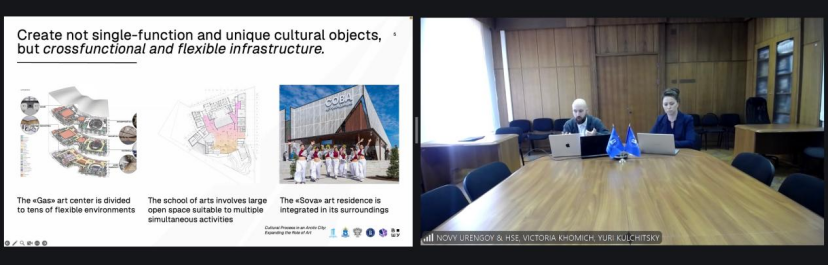
Located 60 kilometers south of the Arctic Circle, Novy Urengoy is an important natural gas industry city in Russia. As the young population grows, demand for sports, culture and leisure activities has continued to increase, while 35% of residents report a lack of cultural activities in their daily lives. In a 2023 assessment of the city’s infrastructure by residents, cultural and leisure facilities were also among the areas where problems were most prominent. To address this gap, the initiative does not simply increase the number of activities. Instead, it works with university teams to incorporate museums, theaters and concert halls into urban planning as a whole, develop cultural infrastructure that can operate sustainably over the long term, and improve the cultural ecosystem by introducing professional talent and cultivating local talent. Victoria Khomich, First Vice Dean and Head of International Affairs, Faculty of Urban and Regional Development, National Research University “Higher School of Economics” (HSE University), said that the initiative ultimately aims not simply to build more facilities, but to respond to “the aspirations and creative potential of the community itself.”
“How can cultural needs be truly integrated with the needs of residents in an industrial city?” The discussion following the presentation began with this question and further explored the sources of project investment, the social impact of infrastructure after its completion, and how to measure the socioeconomic effects of cultural initiatives. Regarding the long-term operation of newly built cultural facilities, participants also asked whether the initiative would continue to rely on municipal budgets and how operating costs could be reduced.
Yuri Kulchitsky, Deputy Head and Senior Lecturer, Vysokovsky Graduate School of Urbanism, Faculty of Urban and Regional Development, National Research University “Higher School of Economics” (HSE University), explained that residents of Novy Urengoy are mainly engineering and technical professionals, for whom culture and sports are among their major leisure needs. The initiative therefore needs to take both types of infrastructure into consideration. To date, the number of cultural activities has increased from 47 in 2022 to more than 150 annually. Among 91 applicants, 54 musicians were selected through an open recruitment process, six of whom also teach at local art schools. More than 100 professional talents have also been introduced from outside the city. With total investment of approximately RUB 30 billion, mainly from the regional budget, the initiative considers energy, heating and power supply efficiency from the architectural design stage in order to reduce future reliance on municipal budgets for operations.
Tharaka Nithi County, Kenya
A Smart Solution to Improve Access to Water and Healthcare
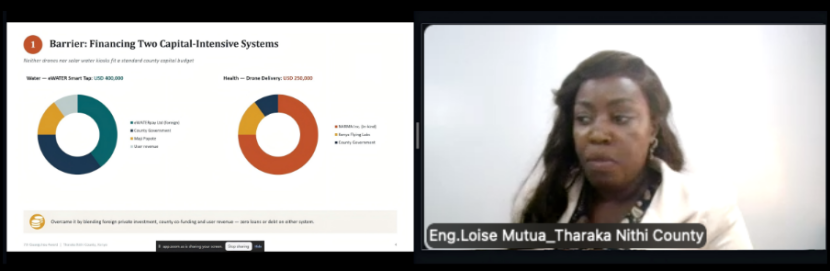
Tharaka Nithi County has a population of approximately 420,000 and covers an area of 2,609 square kilometers, with paved roads accounting for less than 8% of the total. In semi-arid areas, residents in remote communities may need to travel long distances to collect safe drinking water. Flooding and difficult terrain can also disrupt conventional transportation, causing the delivery of medical supplies such as blood, vaccines and serum to take more than one hour. The initiative therefore combines digital water services with low-altitude drone delivery. Through solar power, digital payments, GPS and Internet of Things (IoT) monitoring, it aims to improve water and healthcare services, while incorporating partnerships and local ownership into the initiative’s design. Loise Mutua, Chief Officer in charge of Water in the County Government of Tharaka Nithi, emphasized that technology can make solutions possible, but partnerships and local ownership are what enable those solutions to be implemented effectively.
As technology enters essential public service areas such as water supply and healthcare, how can it be integrated with urban planning? Who is responsible for maintenance, and how can the initiative be scaled up sustainably? Around these questions, the discussion further explored collaboration among regulatory authorities, government agencies and technology teams.
In response, Mutua said that the county government has established a framework for cooperation with the national government and encouraged the joint participation of departments responsible for water resources, health and information and communications technology. The digital water project was launched in 2024 and gradually expanded after small-scale testing, while the drone project is jointly led by the ICT and health departments. To shorten delivery times, the initiative also trains local operators and coordinates with relevant authorities, including civil aviation regulators. To date, more than 9,000 households have gained access to safe and affordable drinking water, with a cumulative delivery volume of 15 million liters. The delivery time for medical supplies has been reduced from more than 60 minutes to approximately 12 minutes.
Bilecik, Türkiye
A Field of Lavender Linking Green Spaces and Livelihoods
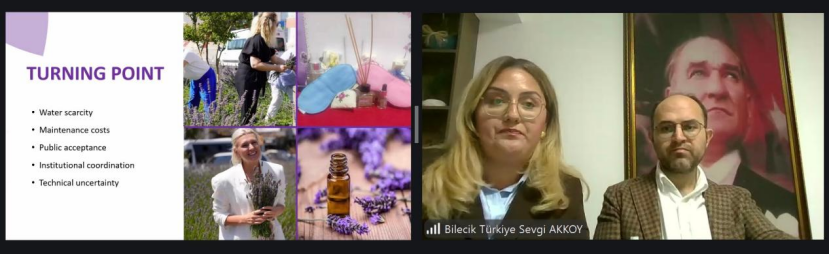
Bilecik has a population of approximately 80,000. Some of its urban green spaces are relatively uniform and require substantial water resources for maintenance, while biodiversity is also limited. In 2023, the city launched the “Fragrant Lavender Road” initiative, planting lavender adapted to the local climate and requiring relatively little water in urban spaces, while expanding community participation through volunteer services and family workshops. The initiative harvests approximately three tons of lavender each year, producing 22 liters of essential oil and 108 liters of hydrosol, which are further processed into products such as soap and fragrances. Sevgi Akkoy, Instructor, Bilecik Municipality, said that the work “is not just about lavender”; more importantly, it is about promoting women’s productivity and creating greater value.
Starting with a single plant, the discussion soon turned to the practical constraint of water resources: How did water consumption change before and after the introduction of lavender? Could the water-saving effects become more significant as the initiative expands? As the planting area grows, will the number of women participating in the initiative also increase? Around green spaces, women’s employment and community participation, the discussion further touched on women’s training and seasonal employment.
“Currently, approximately 4,000 cubic meters of water are used each year for lavender cultivation, and we plan to expand its application further. There are currently around 25 to 30 women participating in the initiative, with a target of increasing this number to around 100 next year,” said Oğuz Cabar, Project Researcher, Bilecik Municipality. In addition to lavender production, the city provides participants with training in textiles, handicrafts and other areas, while offering employment opportunities during the lavender harvest season. He noted that environmental protection and economic development can be advanced simultaneously, while community participation and women’s employment are also important components of the initiative’s continued development.
Istanbul, Türkiye
From Healthy Eating to Active Living: Building a Healthier City for All
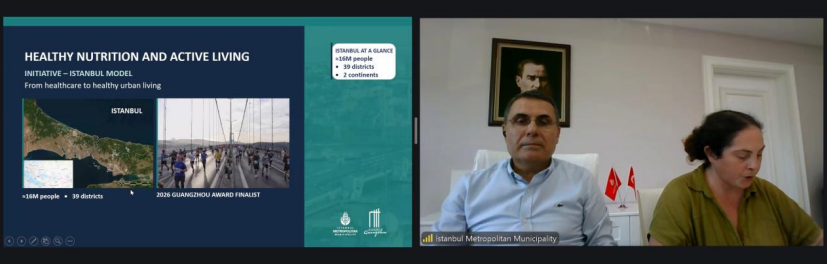
Since 2022, Istanbul Metropolitan Municipality has established an integrated city-wide health model to address issues including obesity, sedentary lifestyles and diet-related non-communicable diseases, bringing together academia, municipal departments and community stakeholders within a common framework. Rather than focusing on a single application or healthcare institution, the initiative combines public health, healthy food, active lifestyles, public spaces and digital tools through institutional coordination, a scientific advisory committee and cross-departmental collaboration mechanisms. According to Önder Yüksel ERYİĞİT, Assistant Professor and Head of the Health Affairs Department, Istanbul Metropolitan Municipality, between 2022 and 2026, three health centers provided more than 45,000 clinical health consultations; between 2025 and 2026, more than 250,000 people participated in sports services.
“How can preventive health initiatives demonstrate that they have truly produced long-term effects?” This was the first question raised during the discussion, which then extended to whether low-income families and people with disabilities can access services, as well as what lessons the model may offer for urban food policies. In response to questions about whether there had been significant improvements in obesity or diabetes, the discussion also examined how to establish a link between short-term service data and long-term health outcomes.
“The initiative currently tracks indicators such as service coverage and BMI, and plans to further strengthen long-term monitoring,” ERYİĞİT responded. In terms of service accessibility, the initiative provides channels for low-income groups and people with disabilities through health centers, public spaces and community services, with all relevant services provided free of charge. Regarding indicators such as obesity and diabetes, he noted that such changes require longer-term observation and can also be affected by socioeconomic and other factors, so it is not yet possible to determine whether significant improvements have been achieved on this basis.
São Paulo, Brazil
Small Changes That Make a Difference in School Meals
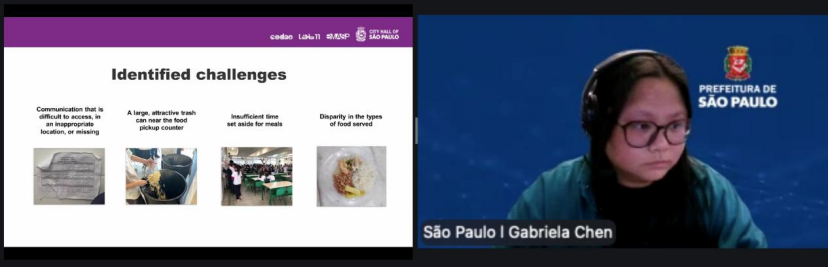
The São Paulo City Hall Public Innovation Laboratory (Lab11), working with the School Meals Coordination Office, applies behavioral science to improve school meals, with a focus on increasing students’ acceptance of certain foods and reducing food waste. The initiative was implemented in eight municipal schools, covering students aged 11 to 14 in Grades 6 to 9, with 100 experts and more than 1,100 students participating. Through experimental design and mixed-method research, the team made small adjustments in areas ranging from menu design, invitations for cooks to participate in food tasting, and the placement of trash bins to digital dining processes, in order to observe how changes in the environment affect students’ choices and food waste. “The pilot showed that the average proportion of students participating in school meals increased by 13%, while food waste decreased by 43%, with each school reducing food waste by approximately 3 kilograms per day,” said Gabriela Yin Chen, Director of Lab11 and Head of the Behavioral Sciences Program, São Paulo City Hall Public Innovation Laboratory.
“How do you ensure that behavioral interventions can address structural problems?” Around this core question, the discussion further explored how students’ family and socioeconomic backgrounds affect school meals, and how different outcomes among schools should be addressed. As the discussion progressed, experts also asked how these interventions could produce long-term effects and how pilot experiences could be translated into approaches that can be scaled up more broadly.
“The initiative does not seek simply to change individual student behavior. Instead, it starts with the school environment and the conditions in which students live and study, and provides targeted recommendations based on the circumstances of different schools,” Chen said. Regarding long-term effects, the initiative currently evaluates indicators including student participation, school meal services and intervention feedback. Its research findings have been developed into reports, food magazines, recipe books and school-specific reports. Relevant materials have also begun to be used in schools’ daily menu design, and the school meals department has incorporated the case into its strategic planning. Carolina Bastos Mendonça, Coordinator of the School Meals Coordination Office, noted that even complex public services can be translated into concrete practices through simple and feasible measures, thereby reducing food waste.
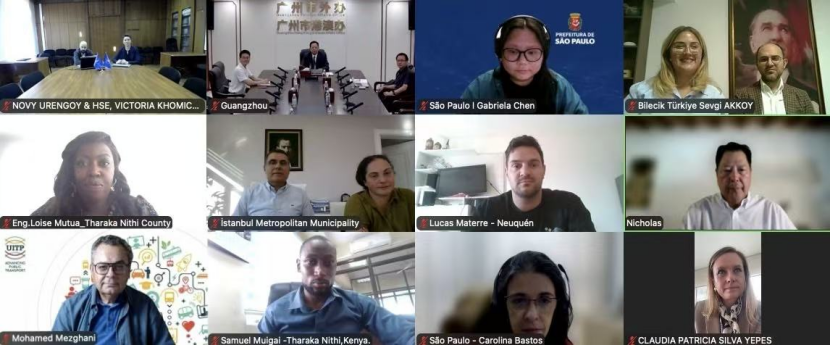
At the conclusion of the session, Nicholas You, Executive Director of the Guangzhou Institute for Urban Innovation and International Advisor to the Guangzhou Award, summarized the three-day presentations and discussions. He noted that the 15 shortlisted initiatives demonstrate how cities are starting from concrete governance challenges and driving changes in decision-making, resource allocation and the division of responsibilities. At the same time, data intelligence is not simply about collecting data; more importantly, it is about using data to create change based on actual needs. Urban governance is also moving beyond an emphasis on participatory planning and participation processes toward empowering stakeholders and communities. An increasing number of cities are also beginning to address multiple interconnected challenges, including climate resilience, public health and social development, at the same time.
With this, the Seminar on Learning from Urban Innovation for the 7th Guangzhou International Award for Urban Innovation officially came to an end. Over the three-day presentations and discussions, representatives of 15 shortlisted initiatives shared important local practices for advancing the Sustainable Development Goals (SDGs) and exchanged experiences in urban innovation around three themes: “Digital Governance and Smart City Innovation,” “Social Inclusion and Just Transition,” and “Climate Action, Public Health and Sustainable Urban Development.”
Following the presentations, the Jury will hold a closed-door meeting and vote to select the five winning cities of the 7th Guangzhou Award. The results will be announced at the Award Ceremony of the 7th Guangzhou Award, to be held in Guangzhou on December 9. The Award Ceremony will take place as part of the Global Mayors’ Forum 2026. For more information about upcoming events, please visit the official website of the Guangzhou Award.

Copyright © Foreign Affairs Office of Guangzhou Municipal Government,
Hong Kong and Macao Affairs Office of Guangzhou Municipal Government All rights reserved.
PRESENTED BY GDTODAY.
粤ICP备09176539号-5
 粤公网安备44010402003415号