


The first session of the 7th Guangzhou Award Seminar on Learning from Urban Innovation: Digital governance & smart urban innovation
On the evening of September 15, the first session of the Seminar on Learning from Urban Innovation of the 7th Guangzhou Award was successfully held. Representatives from five cities: Shinan County, Republic of Korea; Qingdao, China; Chania, Greece; Kampala, Uganda; and Heerlen, the Netherlands, participated in the session and presented their initiatives under the theme of "Digital Governance and Smart City Innovation."
This session focused on how cities can enhance governance efficiency and improve public services through digital governance, smart technologies, and innovative approaches, while addressing complex urban development challenges and strengthening urban resilience. Around this theme, representatives shared their practices, experiences, and explorations in leveraging digital governance and smart technologies to improve urban governance effectiveness and tackle development challenges.
Shinan County, Republic of Korea
Sharing the Benefits of Green Transition: Turning Solar and Wind Energy into Community Dividends
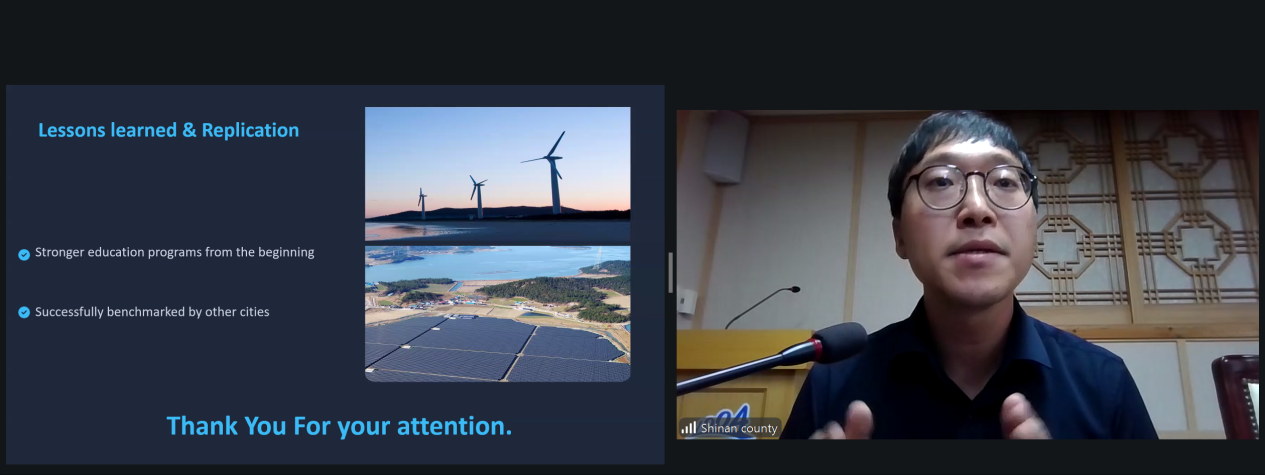
Facing challenges including limited resident participation in energy projects, unequal distribution of benefits, and environmental conflicts, Shinan County has explored a community-led renewable energy model. Son Seung-hoon, head of the Shinan County Renewable Energy Profit-Sharing Programme, noted in his presentation that "the benefits generated from natural resources must be shared fairly with local residents." In 2018, Shinan County launched the programme based on South Korea's first local ordinance requiring renewable energy projects to share their benefits. Island residents invest in solar and offshore wind projects through cooperatives and receive dividends through initiatives such as the "Sunlight Pension" and "Wind Pension" programmes, allowing the economic benefits of the energy transition to flow directly back to the community.
During the Q&A session, the moderator asked about how energy companies participate in benefit-sharing and how the programme ensures that residents without sufficient investment capacity are not excluded from its benefits. "Would private energy companies see benefit-sharing as a burden?" and "How can you ensure that the benefits reach more residents?" The questions focused on the project's benefit-sharing mechanism.
Responding to questions about how energy companies participate in benefit-sharing, Son Seung-hoon explained that the Shinan County government is mainly responsible for policy development and implementation, while energy companies invest in and develop projects to generate revenue, which is then distributed by the government according to the relevant mechanisms. Residents can also participate in relevant meetings with energy companies and express their views. He emphasized that resident participation in policymaking has helped gradually ease conflicts between energy companies and local communities.
Qingdao, China
Data-driven Green Transportation: Using Analytics to Build a Low-carbon City
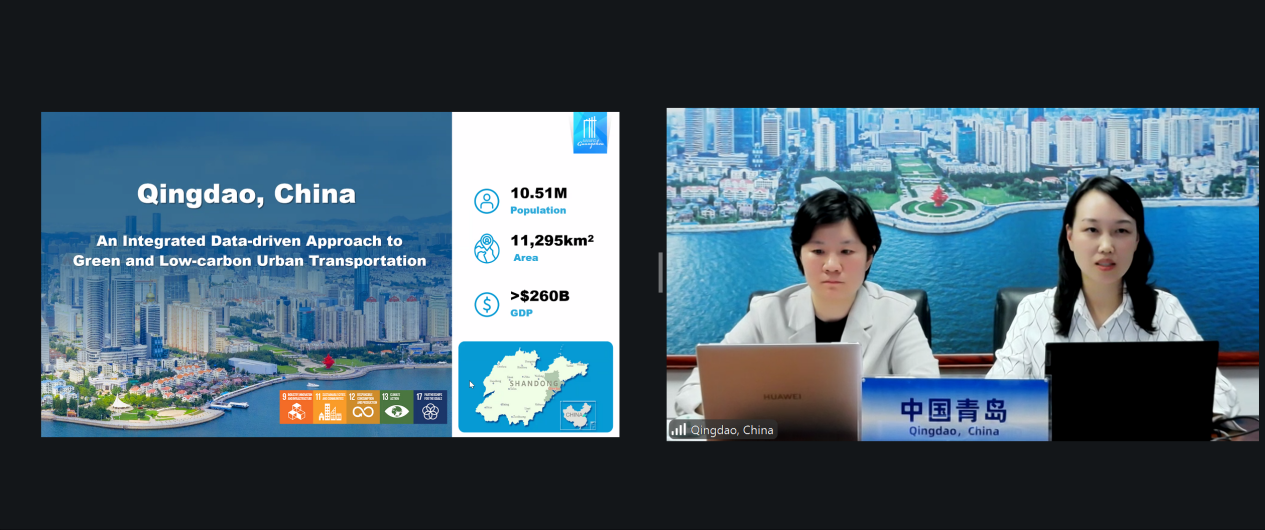
Facing pressure from traffic congestion and carbon emissions, Qingdao has built a data-driven decision-making platform for green and low-carbon urban transportation. The platform integrates data from buses, metro systems, taxis and other transport sectors to provide statistical, monitoring, accounting and analytical support for transport governance. The project has established an indicator system covering nine sectors and more than 60 enterprises, while promoting the use of data for concrete governance actions through energy diagnostics and green travel incentives. To date, the "Low-Carbon Travel" platform has registered more than 9.4 million users and directly contributed to more than 320,000 tonnes of carbon emission reductions. The traffic congestion index has also declined from 1.85 to 1.53. ZHU Mei, Section Chief, Center for International Cooperation and Exchanges, Foreign Affairs Office of Qingdao Municipal People's Government, noted that the platform is built around the principle that "those who participate should benefit," enabling governments, enterprises and citizens to gain tangible benefits from green transportation.
During the Q&A session, participants focused on the relationship between the platform and its carbon-reduction outcomes, as well as how groups such as older people who are less familiar with digital applications can participate. "Do these carbon-reduction outcomes come directly from the digital platform?" and "If residents are not familiar with apps, how can they participate in green travel incentives?" The questions focused on how digital governance can be translated into tangible urban governance outcomes.
"QTGLP, the carbon emission monitoring platform, provides the data foundation for the entire governance system," LI Hao, Deputy Director of the Institute of Integrated Transport Planning at the Qingdao Institute of Transportation Sciences explained. The platform identifies key congestion areas and high-emission scenarios, providing a basis for policies such as optimizing bus routes and taxi operations. For groups such as older people who may have difficulty using mobile apps, green travel incentives are also provided through public transport IC cards. The carbon reductions generated by the platform are aggregated and used in carbon market transactions. Part of the resulting revenue is used to operate the platform, while the remainder is returned to residents through fare deductions, product exchanges and other incentives.
Chania, Greece
AI-Powered Council Transparency: Making Local Democracy "Within Reach"
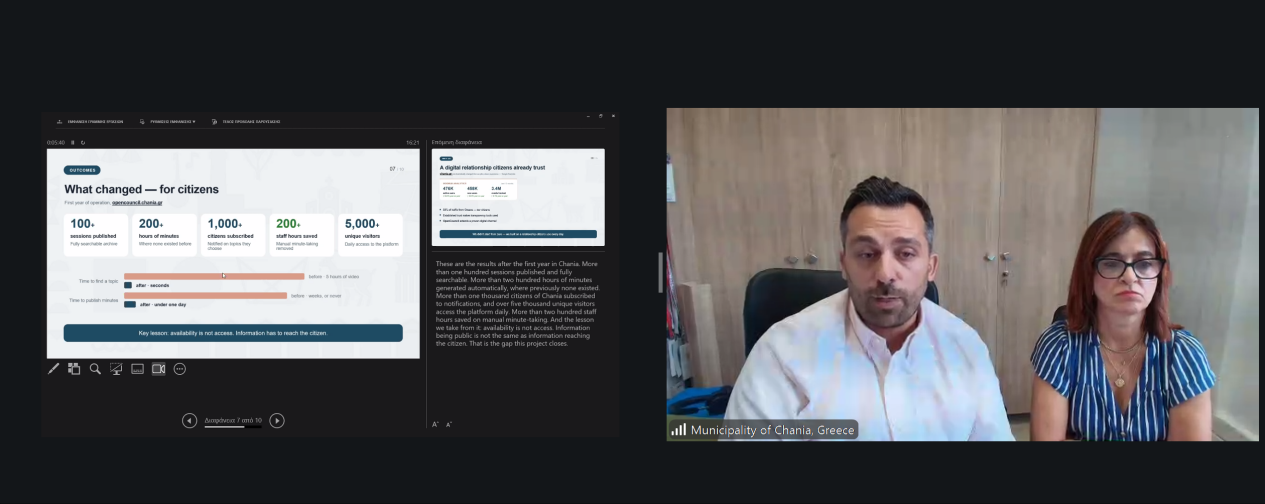
A city council meeting can often last three to six hours, making it difficult for residents to quickly find information relevant to them in lengthy recordings. To address this challenge, the Municipality of Chania developed OpenCouncil, an AI-powered platform for public participation, municipal transparency and collaborative governance. Through AI transcription, semantic search, meeting summaries and map-based information, the platform transforms city council information into content that is easier to search and understand. To date, the platform has archived more than 100 city council meetings and automatically generated transcripts covering more than 200 hours of meetings. More than 1,000 residents have subscribed to topic notifications, while the platform receives more than 5,000 unique visitors per day. Sevasti Polychronaki, head of the Information Technology and Management Department of the Municipality of Chania, said the project is "citizen-centered and designed for replication and scaling," aiming to make municipal information more accessible to residents, journalists, government staff and civil society organizations.
During the Q&A session, participants focused on how citizen feedback is incorporated into the project and whether the platform has changed interaction between the city council and residents since its launch. "Has citizen feedback been incorporated into the system design?" and "How does the project avoid widening the digital divide?" The questions extended from the application of technology to broader issues of public participation.
"Our project is not intended to replace any part of the city council, but simply to make better use of technology," Emmanuil Papadakis, associate of the Municipality of Chania, said in response to questions about the digital divide. Residents can provide feedback through multiple channels, including the website, social media and telephone. Since the platform was launched, city council participants have paid greater attention to making their statements and decisions publicly accessible, while residents can continue to follow relevant issues by subscribing to topics and viewing meeting transcripts. The project is also considering information accessibility for different groups, including journalists and people with disabilities.
Kampala, Uganda
Residents as "Air Quality Watchers": Encouraging Community Participation to Strengthen Air Pollution Governance
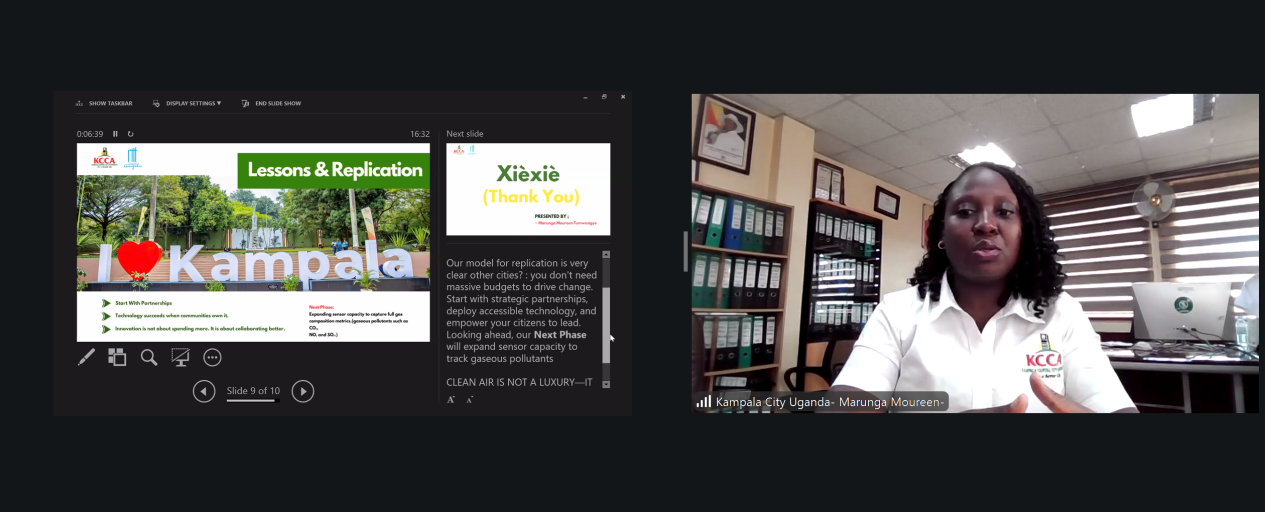
Air pollution is invisible and difficult to perceive, making it challenging for residents to know what kind of air they are breathing. To address this challenge, Kampala has deployed low-cost air quality monitoring devices and used a mobile application and data dashboards to bring real-time air quality information to local communities. Moureen Marunga, Program Officer Innovations of Kampala, explained that the project brings together community leaders, government departments, universities and civil society organizations, enabling residents to move from being passive recipients of air pollution impacts to active participants in governance. To date, more than 100 low-cost air quality monitoring devices have been deployed across Kampala, and more than 500 community leaders have been trained. Compared with the baseline peak level, air quality has improved by 35.5%.
During the Q&A session, the moderator focused on how community residents use the data and how the monitoring devices can achieve citywide coverage. "How do community leaders collect the data?" and "How can more than 100 sensors achieve coverage across the city?" The questions further explored how data can be translated into community action and urban governance.
In response, Moureen explained that data is primarily shared through the "AirQo" mobile application, using color-coded indicators for air pollution levels. This allows residents to monitor local air quality and understand the impact of activities like open waste burning. Covering all of Kampala, the monitoring devices focus on collecting PM2.5data. The project runs alongside broader urban initiatives, including car-free days, tree planting, road paving, and the introduction of electric buses.
Heerlen, the Netherlands
Small Tasks, Shared Rewards: Empowering Citizens to Co-Manage Their City
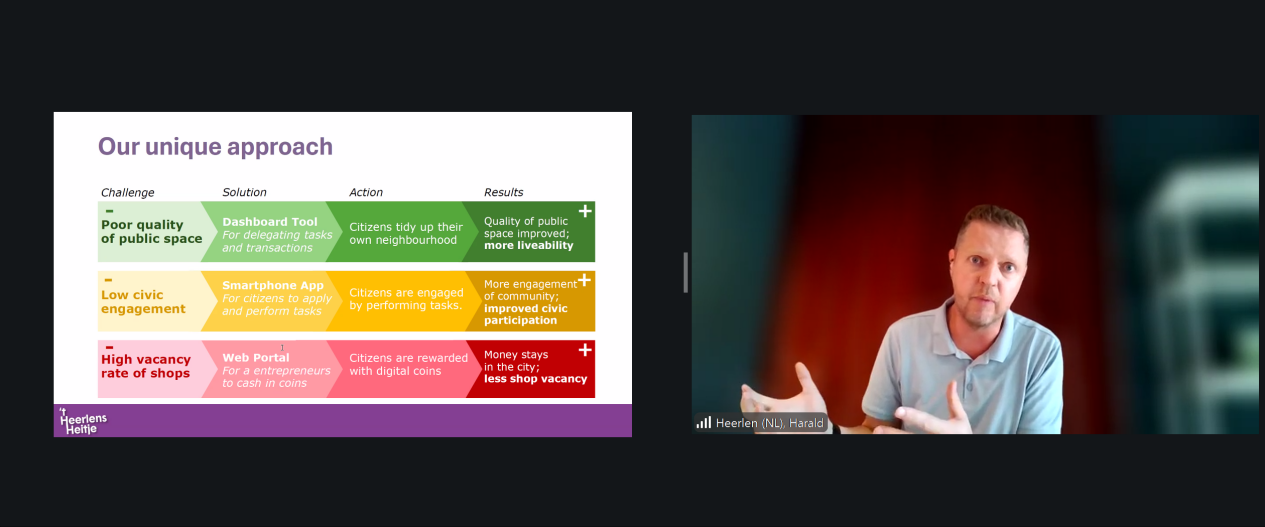
As a former Dutch coal-mining city, Heerlen has faced challenges including growing demand for public-space maintenance, limited civic engagement and vacant shops in the city centre. The city launched the "Heerlens Heitje" project, which uses a mobile application and blockchain technology to offer residents "small tasks," such as maintaining public spaces. Residents receive digital tokens after completing tasks, which can then be spent at local shops, restaurants and other businesses. Harald Wouters, a digital transformation expert in Heerlen, said the mechanism both encourages residents to contribute to their communities and aims to stimulate local economic activity. The platform now has more than 2,000 regular users and has offered more than 1,500 community service tasks.
During the Q&A session, the moderator asked about task quality, the use of digital tokens and the project's impact on local businesses. "How do you ensure that residents complete tasks to the required standard?" and "How do these tokens contribute to the revitalization of local businesses?" The questions focused on how the project can encourage participation while maintaining the quality of public services.
"After completing a task, residents are required to upload photos for review by the municipal government," Pieter Bonnema, a project representative from Heerlen, explained. Some tasks are also subject to on-site inspections, and rewards are issued only after completion has been confirmed. Since the tokens can mainly be used at shops, bars, toy stores and other businesses in Heerlen's city centre, residents tend to spend their rewards locally. Some family-owned businesses can also exchange the digital tokens they receive for cash. The representative also noted that the project is not intended to reduce the number of civil servants, but rather to improve public spaces, promote economic development and increase civic participation.
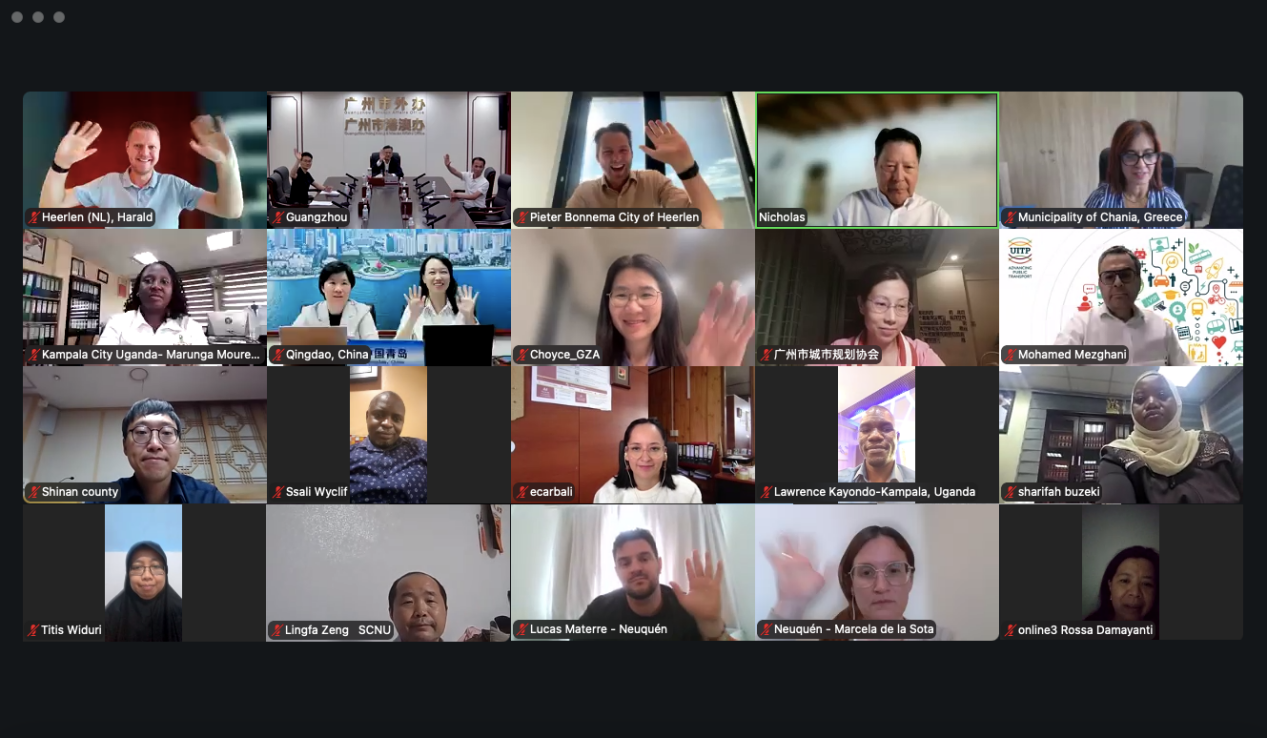
"The five cities demonstrated distinctive practices in digital governance," said Nicholas You, International Advisor to the Guangzhou Award and former Senior Policy and Planning Expert at UN-Habitat, in his concluding remarks.
From sharing energy benefits and promoting green transportation to improving government information transparency, monitoring air quality and encouraging community participation, he noted that digital technologies in these initiatives are not isolated tools. Instead, they are integrated with government governance, enterprise participation and citizen action, becoming practical approaches to addressing real urban challenges.

Copyright © Foreign Affairs Office of Guangzhou Municipal Government,
Hong Kong and Macao Affairs Office of Guangzhou Municipal Government All rights reserved.
PRESENTED BY GDTODAY.
粤ICP备09176539号-5
 粤公网安备44010402003415号